10 Signs You May Need an Eye Examination

Updated: Aug 26
Your eyes can tell you a lot about your vision and overall health.
Regular eye examinations don't just determine whether you need glasses or contact lenses — they also allow your optometrist to assess your eye health and identify signs that may require further investigation.
How often you should have your eyes examined depends on your age, eye health, family history and individual risk factors. But if you notice a change in your vision or develop new symptoms, don't wait until your next routine examination.
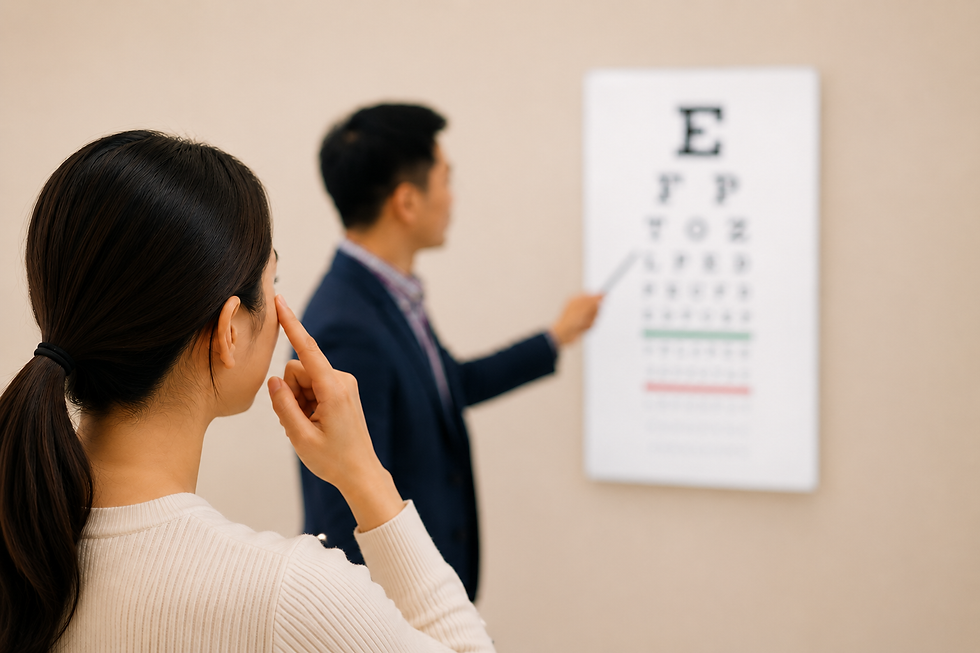
Here are 10 signs it's time to book an eye test.
1. Blurred or Hazy Vision
Difficulty reading, seeing at a distance or recognising fine detail may indicate a change in your prescription or another visual concern.
2. Frequent Squinting
If you regularly squint to make things clearer, your eyes may be working harder than they should. An eye examination can determine whether vision correction could help.
3. New Flashes or Floaters
New or sudden flashes of light, floaters, spots or changes in your vision should be assessed promptly.
A sudden increase in flashes or floaters, a shadow or curtain over your vision, or sudden vision loss requires urgent assessment.
4. Frequent Headaches
Headaches can have many causes, but sometimes they are associated with uncorrected vision, focusing difficulties or prolonged near and screen work.
5. Red, Irritated or Infected Eyes
Persistent redness, itching, swelling, discomfort or discharge may indicate an infection, inflammation, allergy, dry eye or another eye condition.
6. Increased Sensitivity to Light
New or unusual sensitivity to bright light can sometimes be associated with inflammation or other eye conditions and should be investigated if persistent or sudden.
7. Eye Strain or Fatigue
Tired, sore or strained eyes—particularly after computer work, reading or driving—may indicate a vision, focusing, binocular vision or dry-eye problem.
8. Excessive Tearing
Constantly watery eyes aren't always caused by too many tears. Dry eye, irritation, allergies and other conditions can all cause excessive watering.
9. Distorted or Double Vision
Straight lines appearing wavy, objects looking distorted or experiencing double vision should not be ignored. Arrange an eye examination to determine the cause.
10. Difficulty Seeing at Night
Struggling with night driving, glare from headlights or seeing in low-light conditions can be associated with changes in your prescription or eye health.
Who Should Pay Particular Attention to Their Eye Health?
Your optometrist may recommend more frequent examinations depending on your individual circumstances, particularly for children, older adults, people with diabetes, those with a family history of eye disease, contact lens wearers, or anyone being monitored for an existing eye condition.
Children's vision is especially important as visual problems can sometimes affect learning and development without being obvious to the child or parent.
Don't Wait for Your Vision to Change
Many eye conditions can develop before you notice obvious symptoms. Regular comprehensive eye examinations allow us to monitor both your vision and eye health over time.
At Elevate Eyecare, we provide personalised eye examinations with modern diagnostic technology and take the time to explain what we find.
Noticed a change in your vision? Book an eye examination with Elevate Eyecare.
Vision Beyond the Ordinary.

Comments